The Imposter Party Game: How to Play (and How to Play It Free)
The imposter party game is a social deduction word game where one or more secret imposters try to blend in while the rest of the table knows a hidden word. Through one-word clues and a vote, the group hunts the imposter — before the imposter guesses the word and steals the win.
It plays in 5–10 minutes per round with 3 to 20 players, needs only one phone (or paper), and works equally well at a quiet dinner or a chaotic pre-party. Below: the complete rules, the best variants (including the undercover twist, where a player gets an almost-right word), 20+ word categories that always land, tips for winning as the imposter, and a free phone version that handles all the setup for you.
iPhone · Free · No accounts · English & Danish
| Players | 3 to 20 (best at 5–8) |
|---|---|
| Time per round | 5–10 minutes |
| Equipment | One phone, or paper cards |
| Setup time | ~30 seconds with an app · 2–3 minutes on paper |
| Game type | Pass-and-play · Social deduction · Word |
| Imposters | 1 imposter standard · up to half the table for chaos mode |
| Undercover | Optional — gets an almost-right word and doesn't know it |
| Drinking version | Optional — loser of each round drinks |
| Best for | Pre-parties, dinner parties, dorm hangs, bachelorette nights, road trips |
| Free to play | Yes, with the Dronk app |
01 — DefinitionWhat is the imposter game?
The imposter party game is a verbal social deduction game for 3 or more players. At the start of every round, every player except one (the imposter) is shown the same secret word. The imposter only learns that they are the imposter — they never see the word. Players then take turns saying a one-word clue that hints at the secret word without saying it outright. The imposter must bluff a clue based on what others say, while everyone else tries to spot which clue is too vague, too off, or too clever.
After each round of clues, the table votes. If the imposter is caught, they get one final chance to guess the secret word and steal the win. If the group votes out the wrong person, the imposter wins outright. Compared to video games like Among Us, the imposter party game is purely verbal: no tasks, no avatars, no map — just words, faces and bluffing.
The format is sometimes called "the bluffing game", "find the imposter", "secret word game" or "impostor party game". The mechanics are the same.
A popular twist adds a third role: the undercover. An undercover player is shown an almost-right word — toucan when the table has penguin — and is never told they're undercover. Their clues sound slightly off, and they have to blend in without knowing why. Played this way the format is often called the undercover game or undercover word game; it's the same engine with one more layer of doubt.
02 — RulesHow to play the imposter game (step by step)
A full round runs in five phases: setup, reveal, clues, vote, resolve. Here is exactly what the phone shows at each step, screen by screen, as it looks in the Dronk app. Playing on paper? The same phases apply, you just deal cards instead of passing a phone.
-
 1
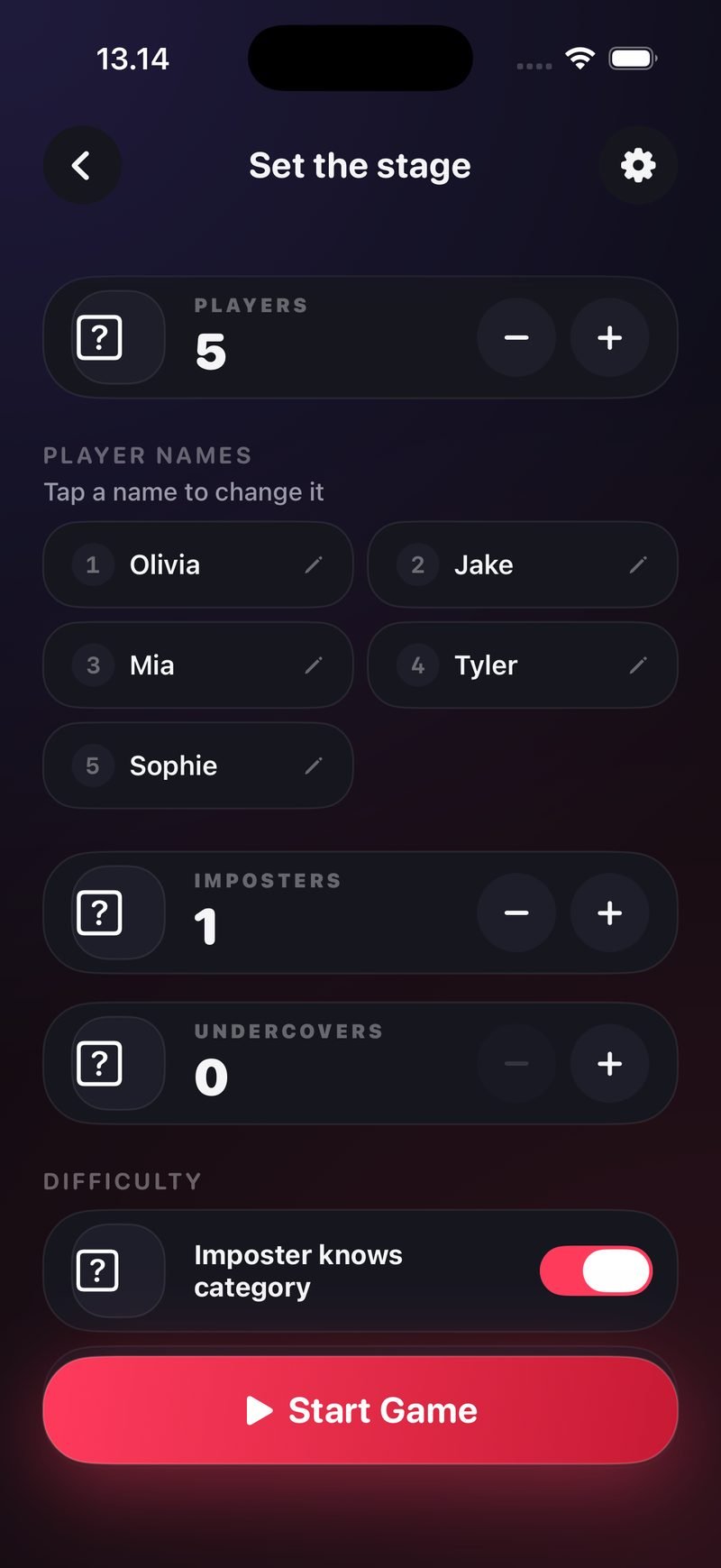
1Setup: players, imposters, undercovers
Set the player count (3–20, five here) and tap a name to change it. Then choose how many imposters are in the round (1 for 3–5 players, 2 for 6–10, up to half the table for chaos) and how many undercovers (0 to start). The Imposter knows category toggle is hint mode: on for new groups, off for veterans.
-
 2
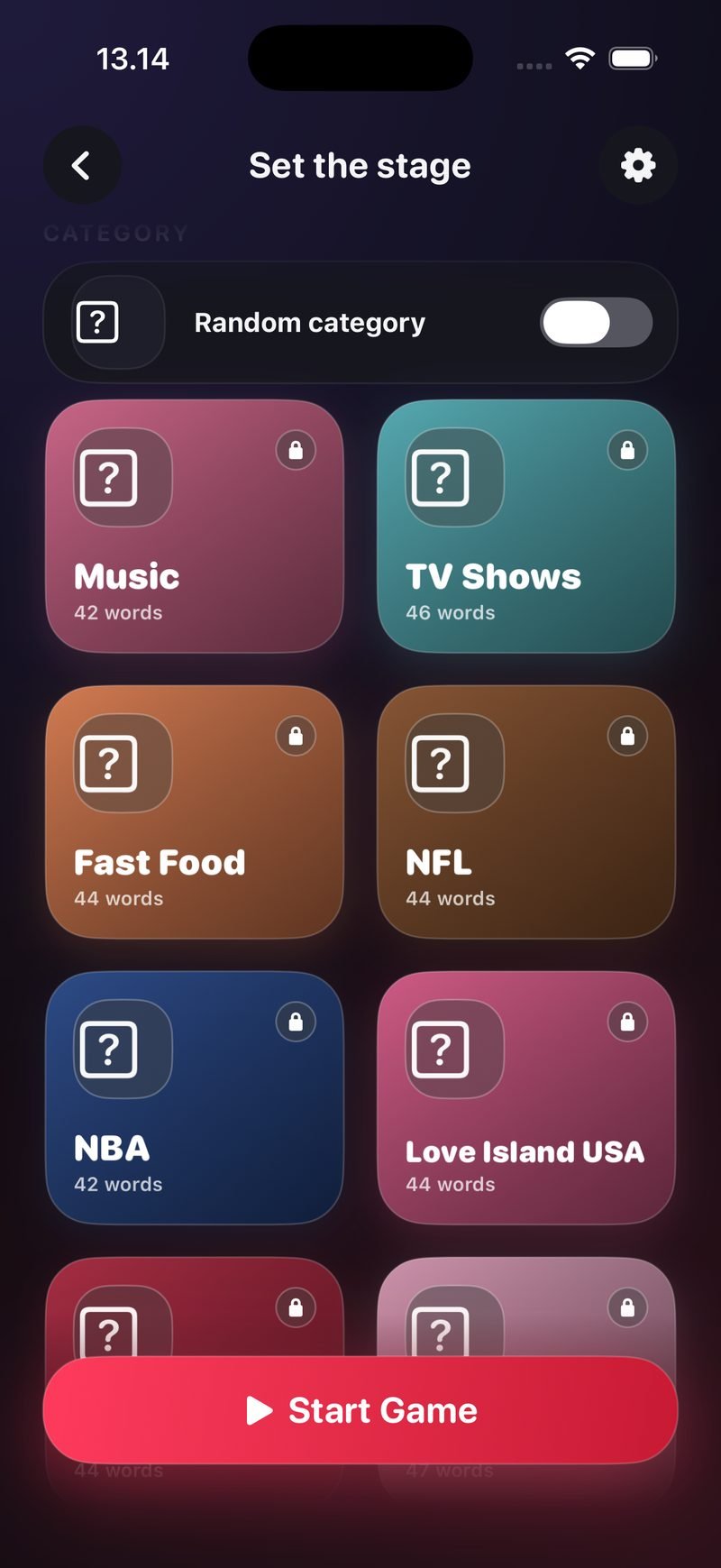
2Pick a word category
Scroll down on the same screen to the category grid: Music, TV Shows, Fast Food, NFL, NBA, Love Island USA and more, each with 40+ hand-picked words. The eight classics (animals, food, movies, places and so on) are free. Flip on Random category if you'd rather let the app choose. Tap Start Game.
-
 3
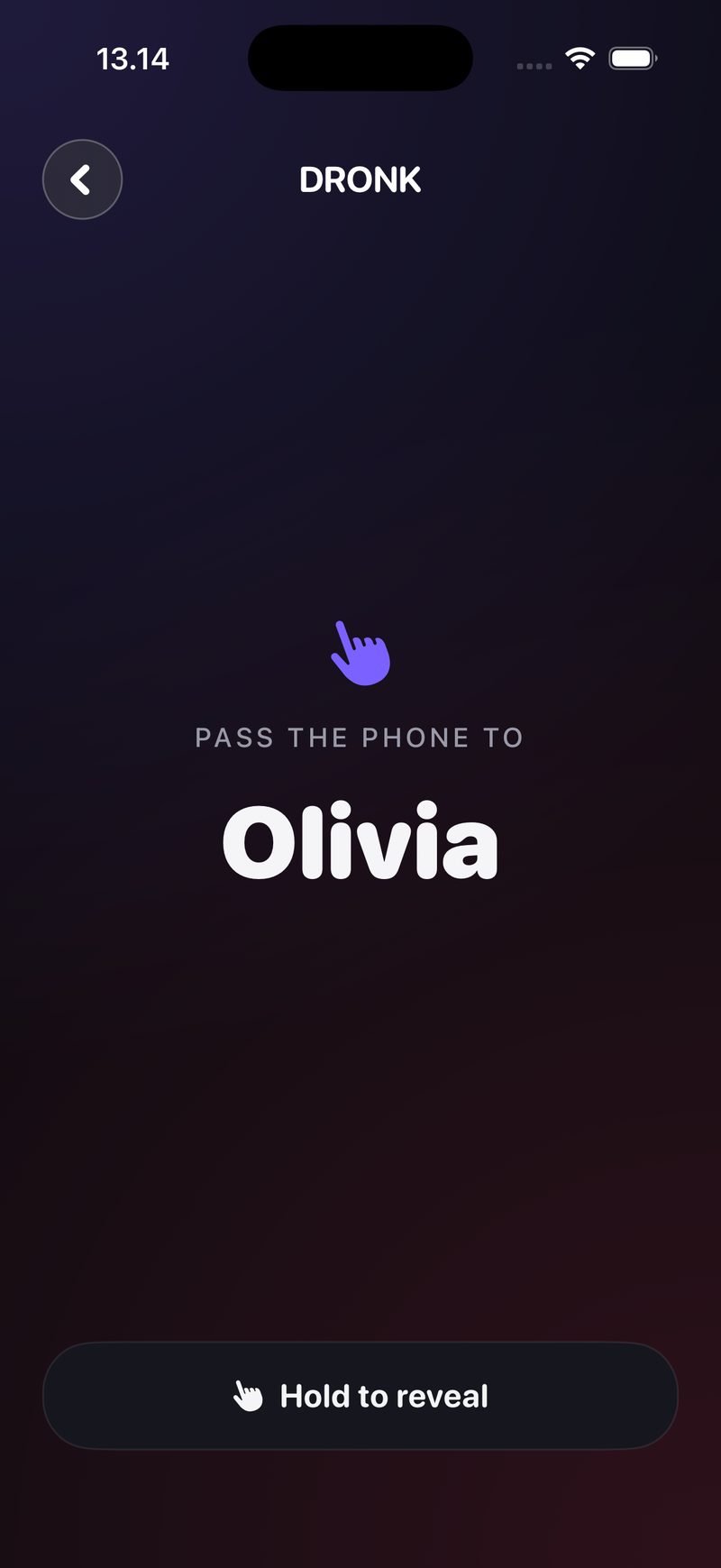
3Reveal: pass the phone around
"Pass the phone to Olivia." The card stays hidden until Olivia presses and holds Hold to reveal, so the person next to her sees nothing. Every player must take the phone and look, otherwise whoever skips gives the game away.
-
 4
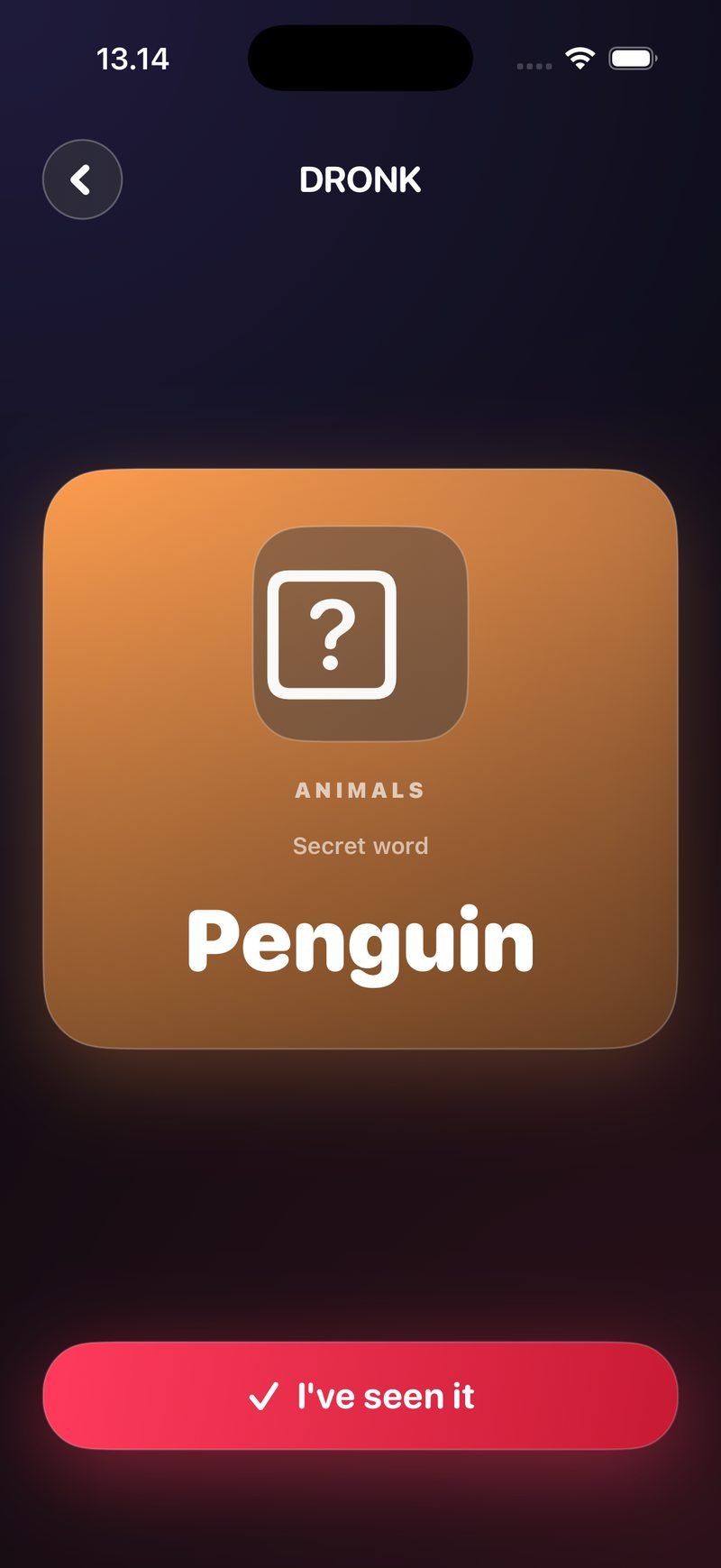
4Most players see the secret word
The card flips: category Animals, secret word Penguin. Everyone except the imposter (and any undercovers) gets this exact card. Tap I've seen it and hand the phone to the next name.
-
 5
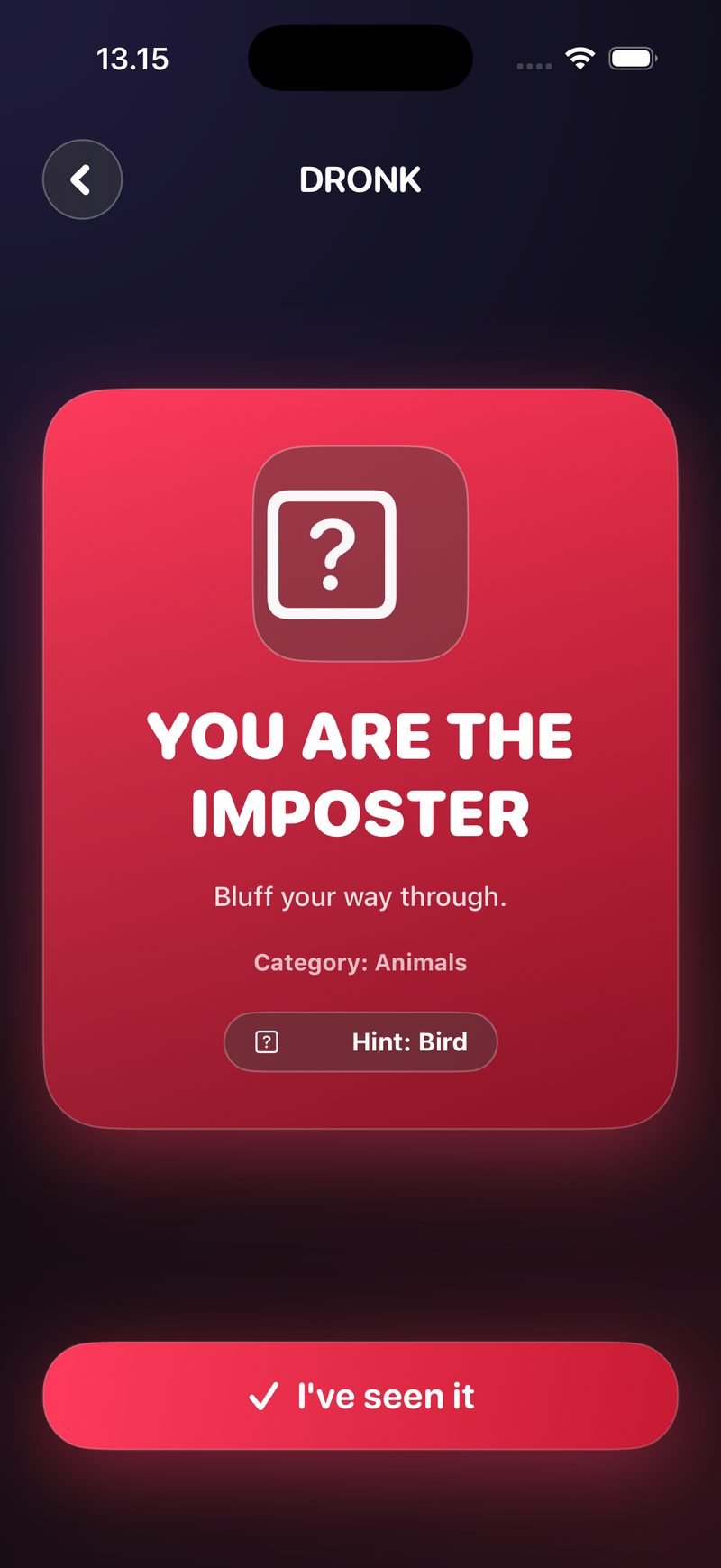
5The imposter sees no word
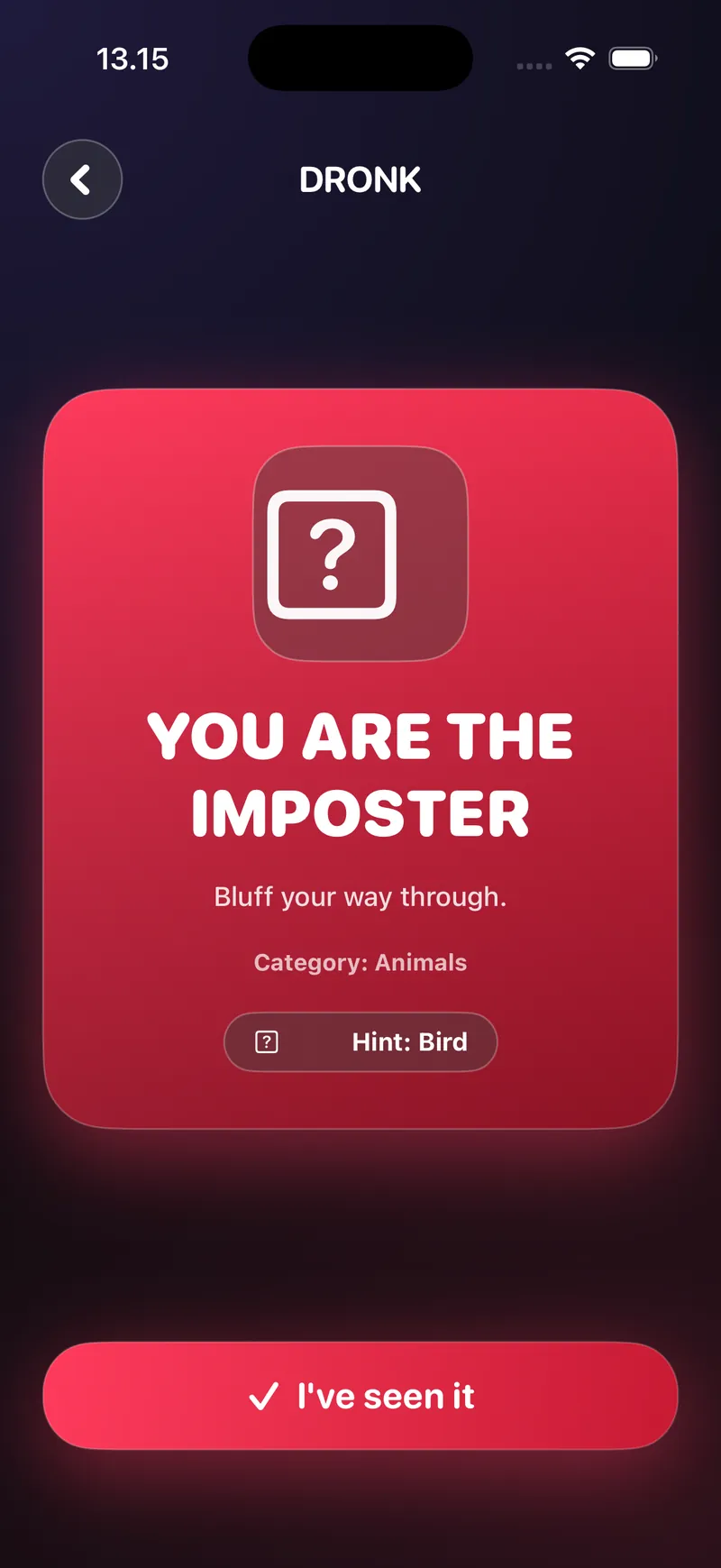
The red card: "You are the imposter — bluff your way through." With hint mode on, the imposter also gets Category: Animals and a one-word hint (Bird). With hint mode off, they get nothing at all and have to work the category out from the first clues.
-
 6
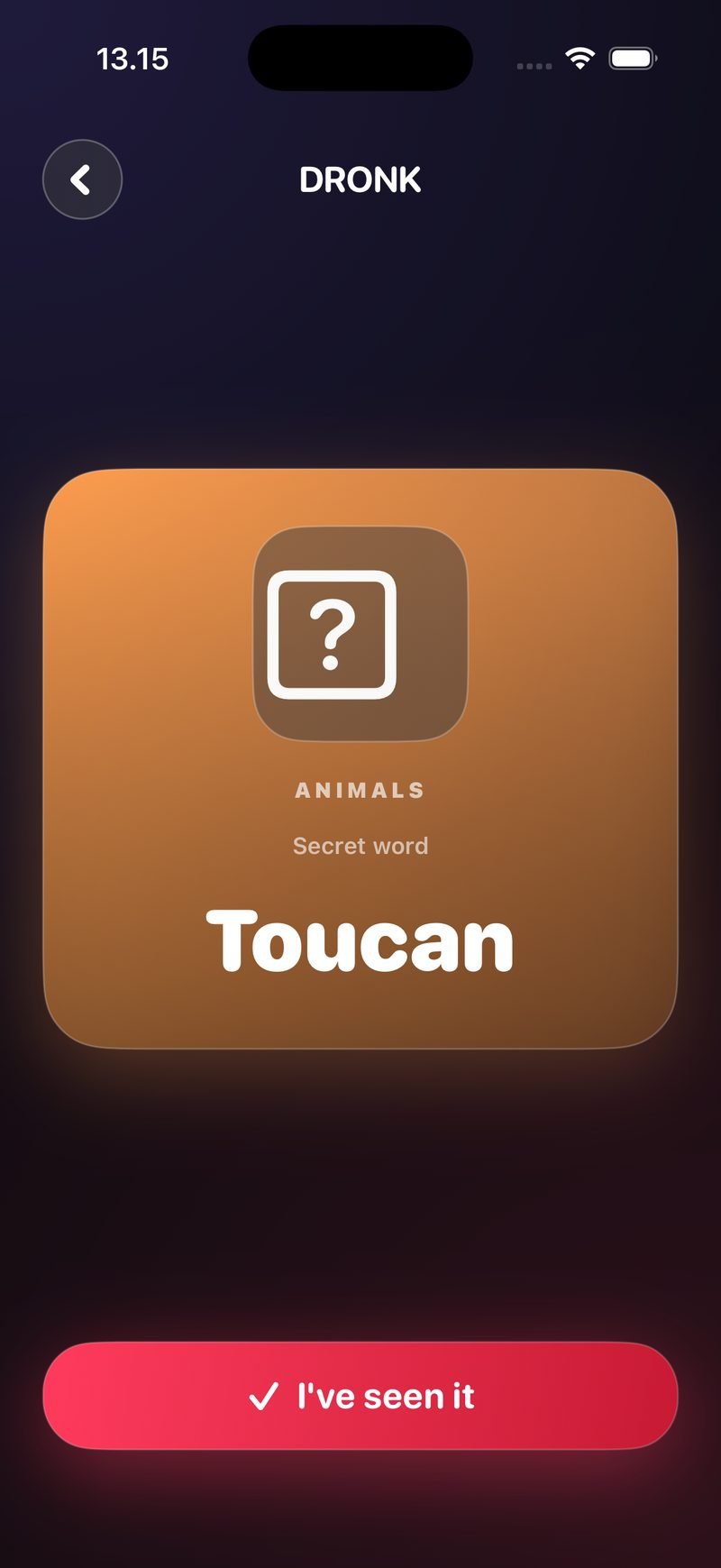
6The undercover gets an almost-right word
If you added undercovers, they see this: the same orange card, same category, same layout, but the word is Toucan instead of Penguin. Nothing tells them they're undercover. Their clues will sound slightly off, and they won't know why.
-
 7
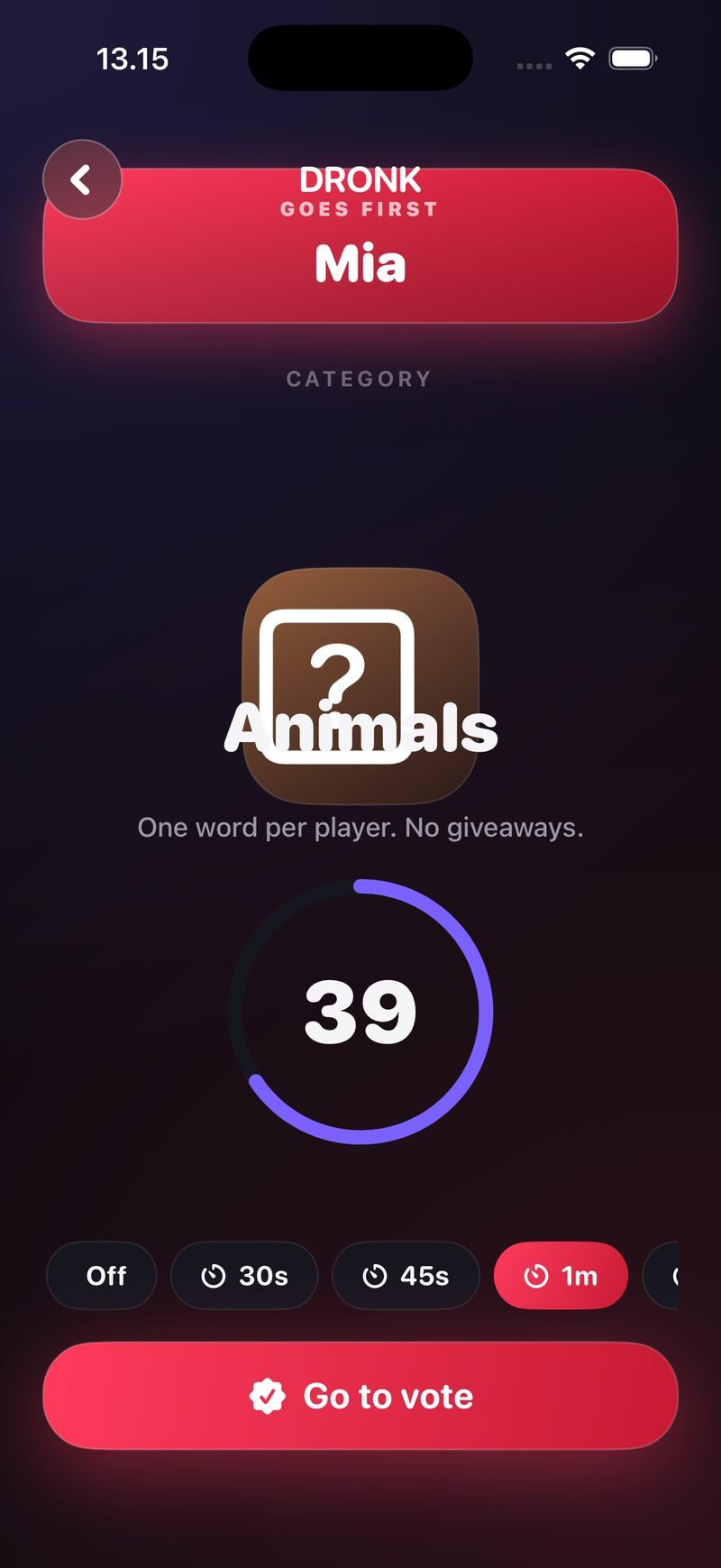
7Clues: one word per player, no giveaways
The app names who goes first (Mia) and keeps the category on screen. Going clockwise, each player says exactly one word that hints at the secret without saying it. The timer ring counts down (1 minute here; 30s, 45s or off also available). Most tables do 1–2 full rounds of clues, then tap Go to vote.
-
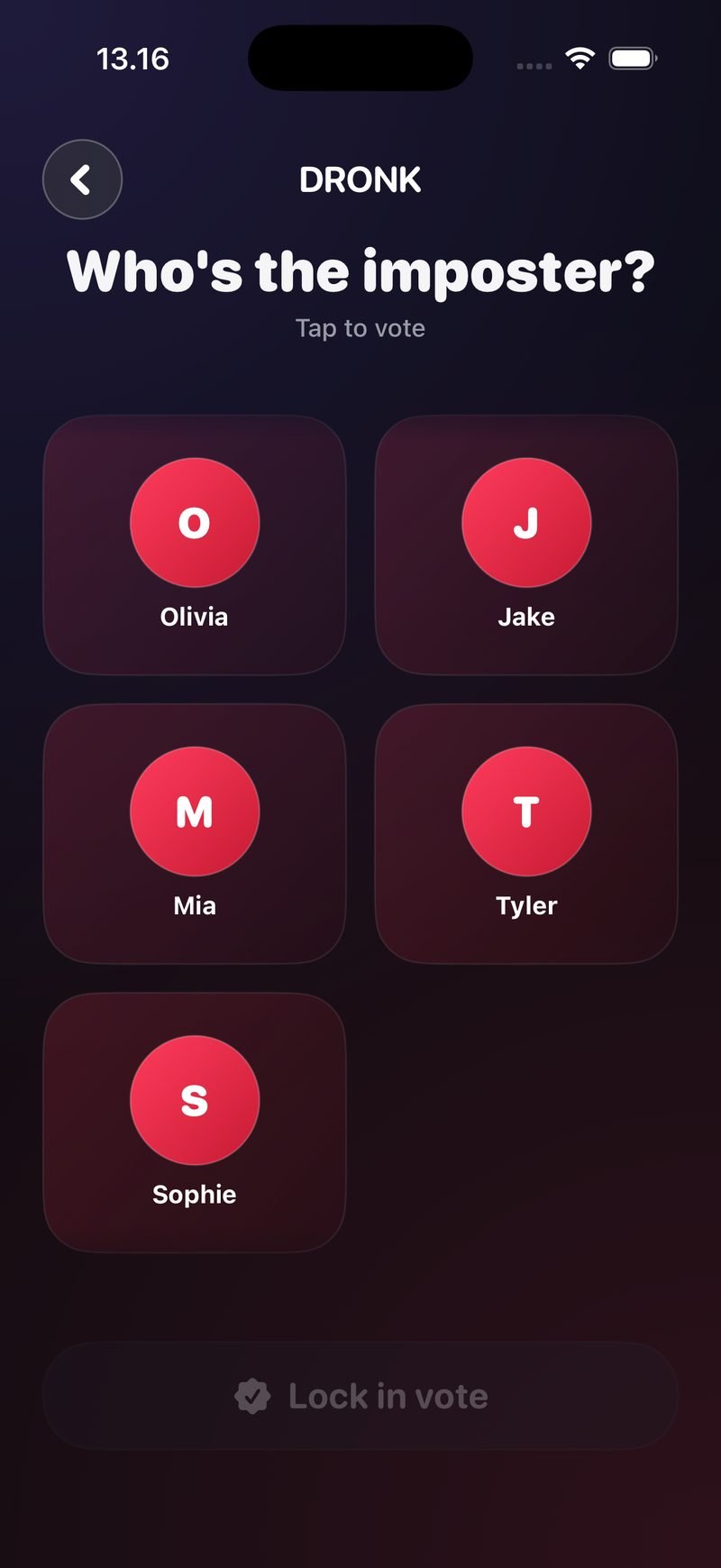 8
8Vote: who's the imposter?
All five players appear as tiles. Argue it out, then tap the suspect and Lock in vote. Accusations, defences and re-tellings of every suspicious clue are half the fun, so don't rush this part.
-
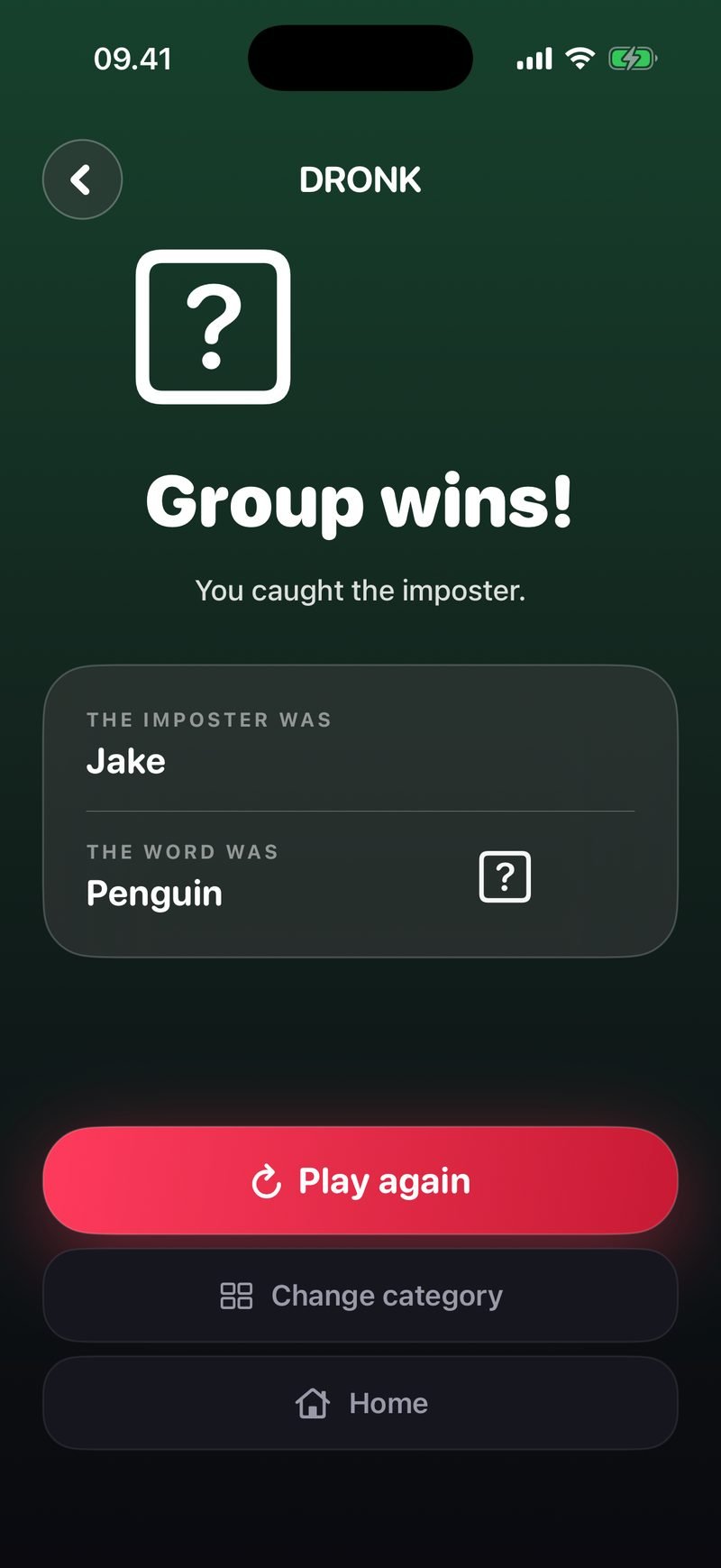 9
9Resolve: did you catch them?
"Group wins! You caught the imposter." The screen reveals that the imposter was Jake and the word was Penguin. If you'd voted out an innocent, the imposter would win outright. House rule: a caught imposter gets one final guess at the word to steal the win. Then Play again, Change category or Home.


Loser of each round (imposter if caught and outguessed; group if the imposter survives) takes a penalty — a drink, a dare, whatever your table agrees on. It speeds up tempo and raises the stakes without changing the core game.
03 — VariantsImposter game variants worth knowing
The same engine handles wildly different vibes depending on how you tune four settings: hints, imposter count, undercover count, and whether the imposter knows the category.
Hint mode (easier)
Show the imposter the category but not the word. The imposter knows it's a movie, but not which movie — so they can give a clue like action without immediate exposure. Recommended for new players, mixed groups, or when the table is already several drinks deep.
No-hint mode (harder)
The imposter sees nothing — no category, no word. They have to listen to the first two or three clues to guess the category, then bluff. This is the highest-pressure version and the most rewarding for the imposter when they pull it off.
Multiple imposters
With 6+ players you can have 2 imposters. With 12+ you can scale to half the table. There are two sub-variants:
- Imposters know each other — they can subtly cooperate, mirroring each other's vagueness so they don't both get caught. Easier for the imposters.
- Imposters don't know each other — both think they're the only one, so they second-guess every odd clue. Maximum chaos.
Undercover mode (the "undercover game")
Add one or more undercover players alongside the imposter. Each undercover sees a word from the same family as the secret — penguin becomes toucan, burger becomes panini — and is never told. They give confident clues that are just slightly wrong, which makes them the perfect decoy for the real imposter and a nightmare for the table. Undercovers can't steal the win with a final guess; they win together with the imposter if the bluffers survive. It's the variant most people mean by the undercover word game, and it's the best way to keep veterans honest.
Timed clues
Add a 30-second clue clock per player. It punishes long stalling (often a tell) and keeps the game flowing. Common timer values: 30s (frantic), 45s (balanced), 60s+ (relaxed dinner-party pace).
Couples / 2-player mode
With only two players the standard rules collapse, but you can play a head-to-head version: each player draws a secret word, gives clues, and the other has to guess in the fewest rounds. It's not "imposter" exactly — it's the same engine retooled. For real imposter mechanics, you need at least 3 players.
04 — ComparedImposter game vs Spyfall vs Werewolf vs Among Us
The "find the hidden role" genre has four big names. They look related at a distance but feel very different at the table.
| Imposter game | Spyfall | Werewolf / Mafia | Among Us | |
|---|---|---|---|---|
| Format | Verbal, in person | Verbal, in person | Verbal, in person | Video game |
| Players | 3–20 | 3–8 | 7–18 | 4–15 |
| Round length | 5–10 min | 8 min fixed | 20–45 min | 10 min |
| What hidden players know | Nothing or category | Nothing about location | Their team only | Other imposters |
| Undercover role | Optional | No | No | No |
| Setup | 30 sec with app | Card deck + locations | Cards + moderator | Install & lobby |
| Drinking version | Yes | Awkward | No | No |
| Works at a pre-party | Yes | Yes | Too long | No |
Pick the imposter game when you want the fastest, lowest-setup option that scales to any group size — especially with people who don't know each other yet. Pick Spyfall if you want the same vibe but with a fixed 8-minute timer and a board of locations. Pick Werewolf for a longer evening with dedicated narrative roles. Pick Among Us when everyone is at home with a phone and a strong Wi-Fi connection.
05 — CategoriesBest word categories for the imposter game
A good category is familiar to every player but specific enough that the imposter can't guess from a single clue. Avoid super-obscure topics (only one player knows them) and too-broad themes (everything is plausible). Start with the eight classics, then move into pop culture once the table has found its rhythm. These 20+ have been tested in hundreds of pre-party rounds:
The classics (free in the app)
Animals
Easy starter. Big enough to bluff, narrow enough to vote.
Food & drinks
Universally accessible — works across cultures and ages.
Movies
High bluff potential. Imposters can lean on genre clues.
Cities & places
Geography clues (cold, beach, capital) buy the imposter time.
Sports
Easy to gesture and emote — works with mixed-knowledge groups.
Jobs
Roles, tools, settings — three angles to bluff from.
Famous people
The loudest, most chaotic category. Risk: cultural gaps.
Random
Anything goes — best for groups already 4 rounds deep.
Pop culture & sports (Premium in the app)
Music
Artists and hits everyone hums. Undercover words are brutal here.
TV shows
Sitcoms to prestige drama. Clues by genre, era or one iconic scene.
Fast food
Chains and menu items. Everyone has an opinion — and a tell.
American football
Teams, legends and Sunday rituals. Best with a sports-heavy crowd.
Reality TV (US & UK)
Villa drama from both sides of the Atlantic. Loud, fast, chaotic.
Dating reality
Roses, red flags and final ceremonies. Great for mixed groups.
The celebrity family
The family everyone talks about — names, feuds and brands.
College life
Dorms, Greek life, finals week. Made for campus pre-games.
Motorsport
Drivers, teams and circuits. Speed clues buy the imposter time.
Basketball
Stars, franchises and nicknames. Fast clues, fast votes.
English football
Clubs, grounds and legends. A must with a Premier League crowd.
Fantasy TV
Houses, heroes and dragons. Big bluff potential with fans.
Animated classics
The songs and sidekicks everyone grew up with. All ages.
The Dronk app ships with all 20+ categories, ~40 hand-picked words per category, each with a hint and an undercover word. The eight classics are free; Premium unlocks the rest. If you're playing on paper, write 8–10 words per category in advance and shuffle.
06 — TipsHow to win as the imposter
The imposter has a structurally harder job, but the table also has a much harder time spotting a calm imposter than a flustered one. Three habits matter more than anything else:
Listen to the first two clues, then mirror the energy
The first clue is the most informative — it's almost always the most "central" word for the secret. The second clue narrows the family. By the third turn (which is often you), you have enough to give a vague-but-plausible clue. Don't try to be too clever; match the average vagueness of the table. If everyone is giving safe one-syllable words, do the same.
Pick clues that fit two or three options at once
If you've narrowed the secret to "either a tiger, a leopard, or a lion", say fast or fur. Words that fit several plausible answers are uncatchable. Avoid words that fit only one option: those are tells in both directions (too perfect = clearly the word, too off = clearly bluffing).
If you get caught, treat the final guess like a logic puzzle
You've heard 6–12 clues. Group them: which 2–3 words are the most central? What's the simplest single answer that fits all of them? When in doubt, guess the most "default" example of the category — it's the most common secret word groups land on.
Playing with undercovers: read the room, not just the clues
In the undercover game, a confident clue that draws puzzled looks is the biggest tell of all — but it can be an undercover, not the imposter. If your clue got the weird looks, consider that your word might be the almost-right one and steer your next clue toward the family, not the specific. As the imposter, an undercover is your best friend: let the table chase them first.
The fastest way to spot an imposter isn't to listen to clues — it's to watch reactions to others' clues. Innocents nod when a clue is on-target. Imposters don't know whether to nod or not, so they often over-react or freeze. Keep one eye on the listening, not just the talking.
07 — FAQImposter game: frequently asked questions
What is the imposter game?
The imposter game is a social deduction word game where one or more secret imposters try to blend in while the other players know a hidden word. Through one-word clues and a vote, players try to find the imposter — before the imposter guesses the word.
How many players do you need for the imposter game?
You need at least 3. The game scales smoothly to 20+. With 3–5 players use 1 imposter; with 6–12 you can have 2; with larger groups, scale up to half the table for chaos mode.
How long does a round last?
5–10 minutes per round. Setup is under a minute with an app. A full game is usually 4–8 rounds, so it fits a 30–60 minute pre-party slot.
Is the imposter game the same as Among Us?
No. Among Us is a video game with tasks, sabotage and avatars on a spaceship. The imposter party game is a verbal, in-person game built around a secret word and one-word clues. The shared idea is hidden roles, but the gameplay is completely different.
Can you play the imposter game without an app?
Yes. Prepare paper cards: one card per player with the secret word, plus one marked "imposter". Shuffle and deal. Downsides: setup work and the risk of seeing each other's cards. An app eliminates both.
Can you play with only 2 players?
Not as a true imposter game — you need at least 3 for the deduction to work. With 2 players you can play a head-to-head guessing variant (each player draws a word, gives clues, the other guesses), but the bluffing dynamic is gone.
What is the undercover role in the imposter game?
An undercover player gets an almost-right word — toucan when everyone else has penguin — and doesn't know they're undercover. Their clues sound slightly off, so they have to blend in without realising why. When voted out, their role is revealed and the round continues until every imposter and undercover is caught. This variant is often called the undercover game or undercover word game.
What are good word categories for the imposter game?
Animals, food, movies, places, sports, jobs, famous people and "random" are the classics. Pop-culture categories — music, TV shows, fast food, American football, reality TV, dating shows, college life, motorsport, basketball, English football — work great with the right crowd. Familiar enough that everyone can give clues, specific enough that the imposter can't guess from the first few words.
How do you win as the imposter?
Listen to the first 2–3 clues to narrow the category, then give a vague but plausible word that fits multiple options. Match the average vagueness of the table, don't over-clever. If caught, use the final guess to steal the win.
Is there a free imposter game app?
Yes. Dronk is free on the App Store: 8 classic word categories, multiple imposters, the undercover role, optional hint mode and a built-in timer — Premium unlocks all 20+ categories. The same app has 13 other party games. No accounts, no friends list — one phone is enough for the whole table.
08 — In the app13 more party games in the same app
The imposter game is one of 14 games in Dronk. Same phone, same table, no extra downloads — several of them also run LIVE with a pin code so everyone plays from their own phone.
Ready to find the imposter?
Dronk is the free phone version of the imposter and undercover game. Pass-and-play, 20+ categories, 14 games in one app, no accounts. Live on the App Store now.
Get Dronk freeiPhone · iOS 17+ · Free · English & Danish